
The Hidden IT Costs of “We’ll Deal With It Later” Decisions for Small Businesses
If you’ve ever said, “It’s working… let’s deal with it later,” you’re not alone. For many small businesses, delaying IT decisions feels practical. There are employees to manage, customers to serve, and real cash-flow concerns to balance. When systems appear to be working, IT naturally slides down the priority list.
The problem is this: IT doesn’t stay the same just because you stop paying attention to it. And when delayed decisions finally come due, they almost always arrive as emergencies, usually at the worst possible time.
TL;DR for Small Business Owners
· Delaying IT decisions doesn’t remove cost. It shifts it into unpredictable, urgent expense.
· Most IT failures aren’t random; they’re the result of years of quiet deferral.
· Emergency IT work costs more because it removes choice, timing, and leverage.
· Planned IT spending is predictable. Deferred IT spending rarely is.
· The goal isn’t spending more. It’s spending intentionally.
Why “Later” Feels Like the Smart Choice for Small Business IT
In many cases, delaying IT work feels responsible. Budgets aren’t unlimited, systems appear to function, and nothing is on fire. Compared to marketing, staffing, or revenue generation, IT rarely feels urgent, so it’s easy to push preventative work to “later.”
When technology works, it’s invisible. There’s no immediate pain, and there’s no obvious reason to interrupt business momentum for a preventative project. That logic holds… until something breaks.
Because while it might feel like nothing is changing, IT environments still age. Hardware wears down, software support windows close, vendor requirements evolve, and security standards tighten. Choosing “later” doesn’t freeze time. It quietly compounds risk.
The Hidden IT Costs Most Small Business Owners Don’t See
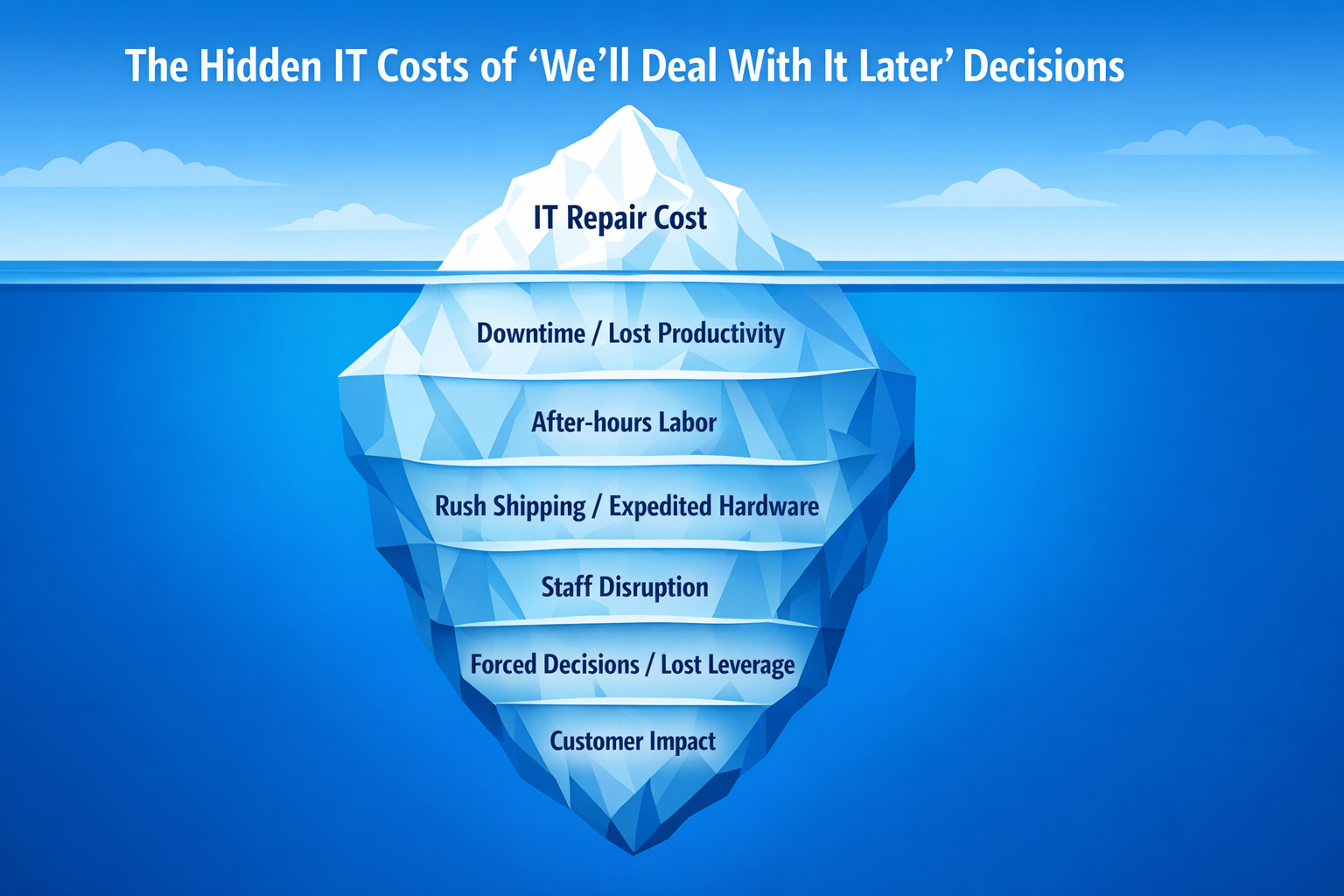
The real cost of deferred IT rarely shows up on the initial quote. It shows up later in second- and third-order effects most businesses don’t budget for until they’re living through them.
Emergency labor always costs more
Planned projects are controlled; emergency work is not. Unexpected failures bring after-hours labor, rapid diagnostics, temporary fixes, expedited hardware, and rushed decisions. Even with fair pricing, emergency work inherently involves more uncertainty, more moving parts, and more time spent just getting back to “working.”
Downtime strikes at the worst possible moment
IT failures rarely happen on quiet days. They hit during busy seasons, payroll runs, patient hours, tax deadlines, or customer delivery windows. And the cost goes far beyond repair labor: productivity drops, staff sit idle, clients wait, and revenue pauses. Most businesses budget for fixing the technology, but not for the business disruption surrounding it.
Forced decisions eliminate leverage
Planned upgrades allow for comparison, timing, negotiation, testing, and preparation. Urgent failures remove all of that. The conversation shifts from “What’s best?” to “What works right now?” Solutions chosen under pressure often carry higher long-term cost and lower satisfaction.
Small issues turn into full-scale problems
Deferred systems tend to entangle themselves with everything else. What starts as a simple server replacement turns into software upgrades, compatibility fixes, workflow changes, and long-forgotten configurations resurfacing under a deadline. The longer things sit, the more “simple” projects turn into multi-layered ones.
Why IT Failures Feel Random (Even When They’re Not)
A common phrase during outages is: “Nothing changed.” And most of the time, that’s true. No one intentionally made a risky change. But systems still evolve through aging components, background updates, and shifting vendor expectations. Most outages feel sudden, but most causes are years old.
The failure isn’t random, the bill just arrived.
Everyday Examples Small Businesses Recognize
· A server replacement gets delayed… until hardware fails unexpectedly.
· An older business application works fine, until it won’t run on newer systems.
· A Wi‑Fi upgrade improves coverage but exposes outdated switching or cabling behind the scenes.
· User access and permissions quietly sprawl until a migration forces a painful cleanup.
These scenarios aren’t unusual. They’re the predictable outcome of long-running deferrals.
Why Deferred IT Almost Always Costs More Than Planned IT
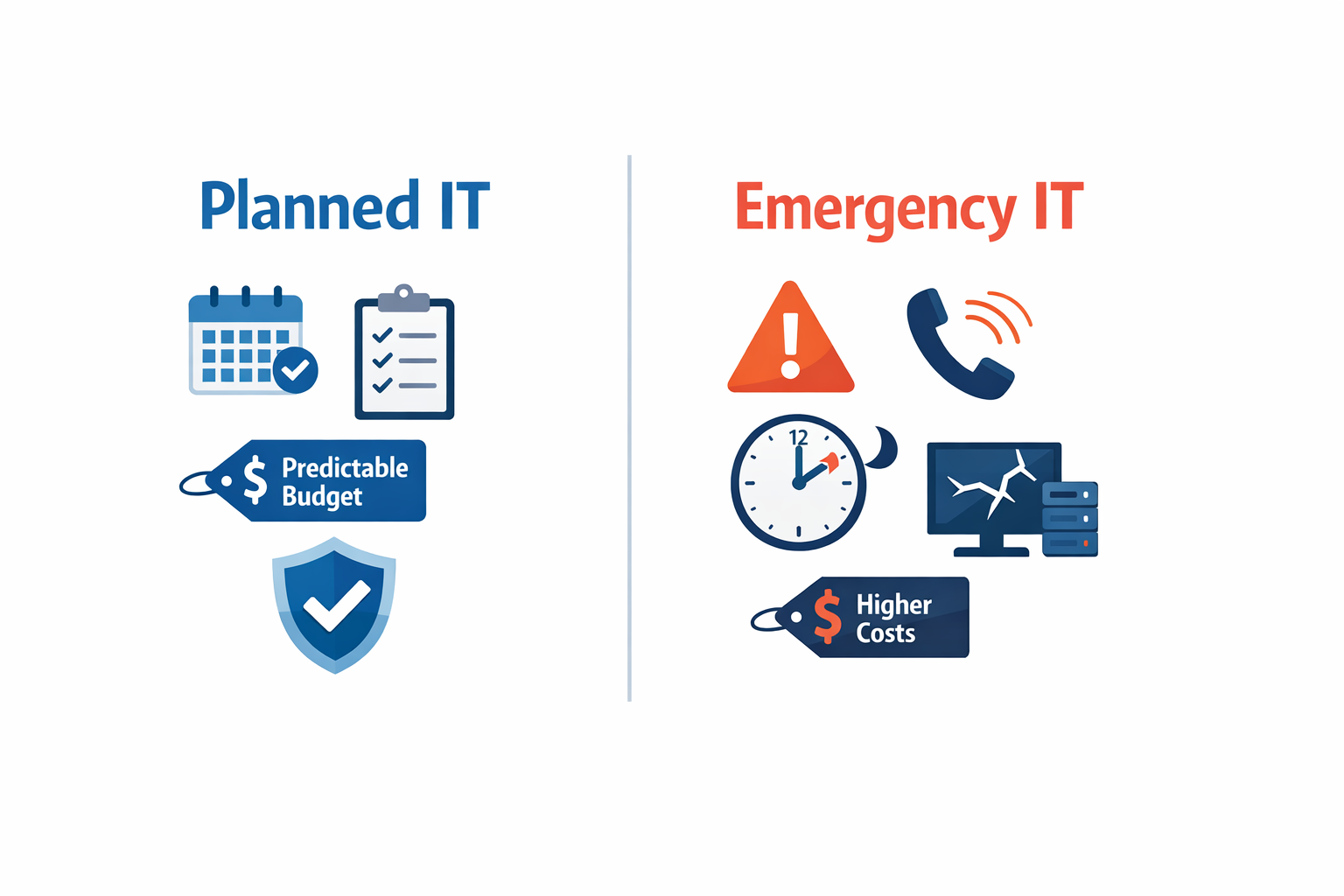
Planned IT spending gives you:
· Predictable timing
· Budget visibility
· Better vendor choices
· Minimized downtime
· Reduced stress
Deferred IT spending replaces those benefits with urgency, surprise, and lost leverage. The issue isn’t that the total cost is always higher; it’s that the cost becomes unplanned, and unplanned expenses hit small businesses harder than almost anything else.
This Isn’t About Spending More on IT
Proactive IT planning doesn’t mean replacing everything early or overspending on technology. It means understanding what’s critical, what’s aging, and what can safely wait. Delaying with awareness can be rational; delaying without visibility is expensive.
What Dealing With IT Earlier Actually Looks Like
It doesn’t require complex strategy documents or enterprise-level planning. It starts with visibility into system age, lifecycle timelines, and business-critical dependencies.
It means reviewing technology annually instead of only during emergencies, and aligning major changes with the business calendar. The goal is fewer surprises and fewer forced decisions.
The Question Every Small Business Owner Should Ask
If this system fails at the worst possible time, how much control will we actually have? Delaying IT decisions doesn’t eliminate risk. It shifts control away from the business. Planned decisions preserve leverage, and deferred decisions surrender it. That’s the real hidden cost of “we’ll deal with it later.”