
One Vulnerability Is All It Takes
TL;DR
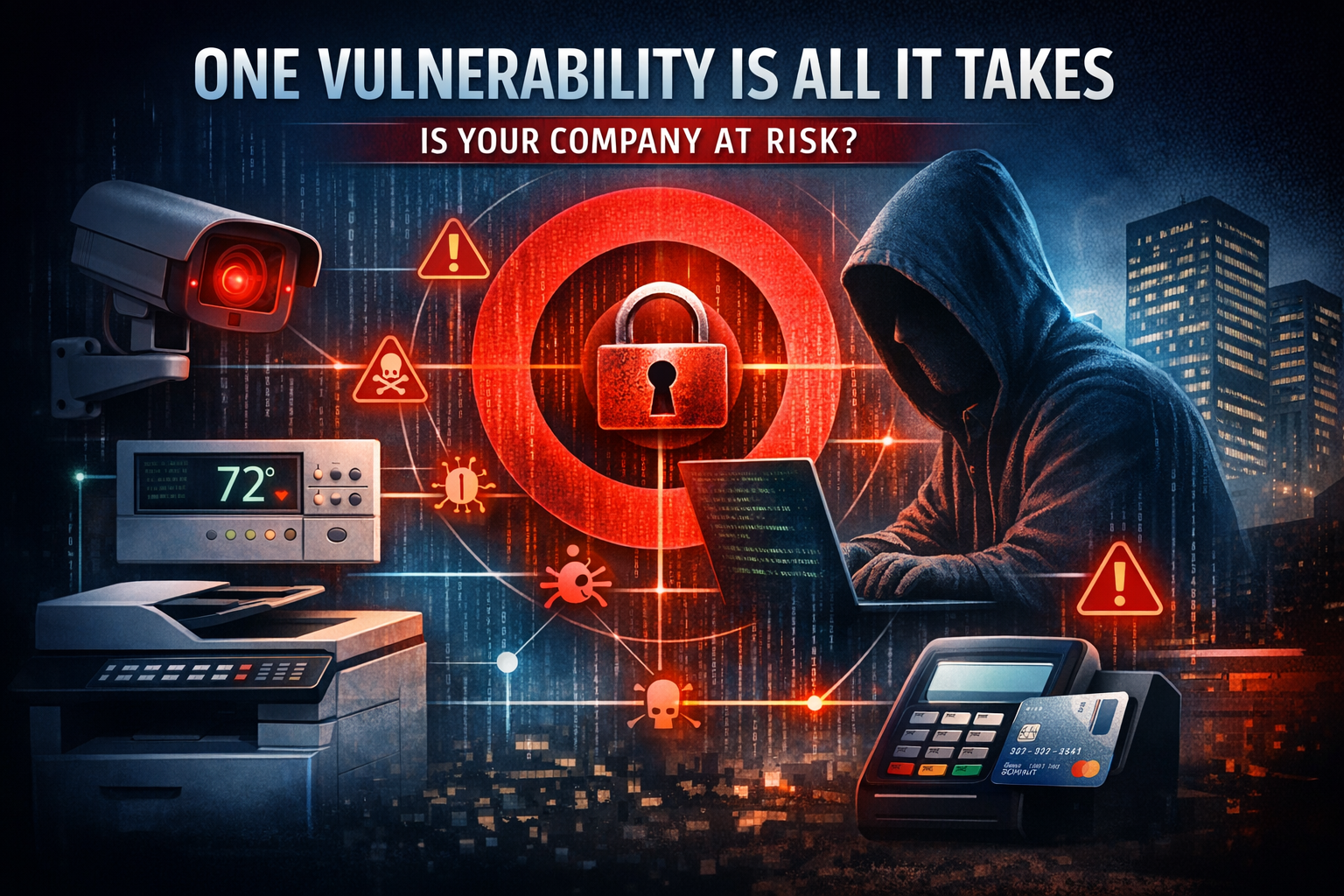
Most cyber incidents don’t start with a major failure—they start with one overlooked vulnerability. Often, it’s not a server or laptop, but an internet-connected device like a printer, camera, or HVAC system. High-profile breaches (like Target) began exactly this way. If you don’t know everything connected to your network—or whether those systems have known vulnerabilities—you’re exposed. That’s why vulnerability management isn’t optional. At Infinite Technologies (InfinTechUSA), it isn’t an add-on—it’s built in, continuously monitored, and managed daily.
Want to Know Where Your Risk Really Is?
If you’re a business in Omaha or the surrounding Nebraska area and you’re not sure what devices are on your network—or whether those systems have known vulnerabilities—that’s the gap attackers look for. Let’s have a simple, no-pressure conversation about visibility, risk, and how vulnerability management should actually work in your environment.
Start with a quick security conversation with Infinite Technologies USA.
Most cyber incidents don’t start with a dramatic, full-scale attack. They start quietly—with one overlooked vulnerability: one device, one system, or one setting that was missed or postponed.
Why it matters: For Omaha-area small and midsize businesses, that single weakness can be the difference between normal operations and a cybersecurity incident that impacts clients, staff, and revenue.
The Myth: “The Vendor Keeps That Updated
One of the most common—and dangerous—assumptions we see is this:
“That device is vendor‑managed. They keep it updated, right?”
In many cases, they don’t.
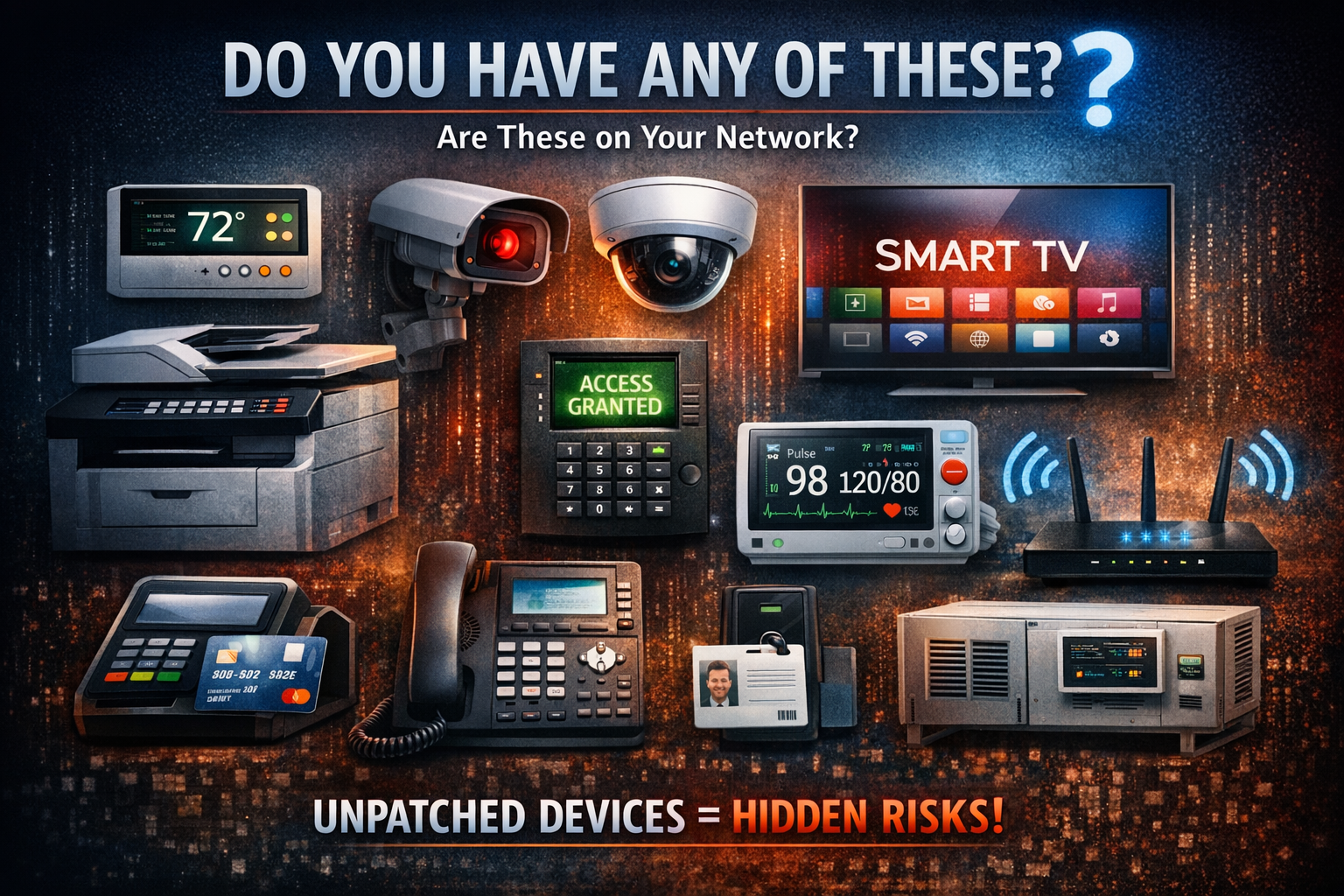
Printers, security cameras, access control systems, HVAC controllers, medical devices, and other IoT systems are often installed by a vendor, configured to work, and then effectively forgotten from a security standpoint.
Updates may technically exist—but:
They aren’t automatic
They require manual installation
They depend on the customer to apply them
Or they stop entirely once the device reaches “end of support”
Vendors are typically responsible for making the device function, not for continuously monitoring your environment for vulnerabilities or ensuring patches are applied in a timely manner.
Set It and Forget It” Is Where Risk Grows
Once an IoT device is installed and working, it often falls into a blind spot.
It doesn’t behave like a workstation. It isn’t part of a normal patch cycle. And no one checks on it unless it breaks.
Over time:
Firmware ages
Vulnerabilities are disclosed
Exploits become public
Attackers actively look for those exact devices
From the attacker’s perspective, these systems are ideal:
Always on
Internet-connected
Rarely monitored
Frequently unpatched
The risk isn’t malicious vendors—it’s misplaced trust and lack of visibility.
Responsibility Ultimately Comes Back to the Business
Even when a device is “vendor‑supported,” the business still owns the risk.
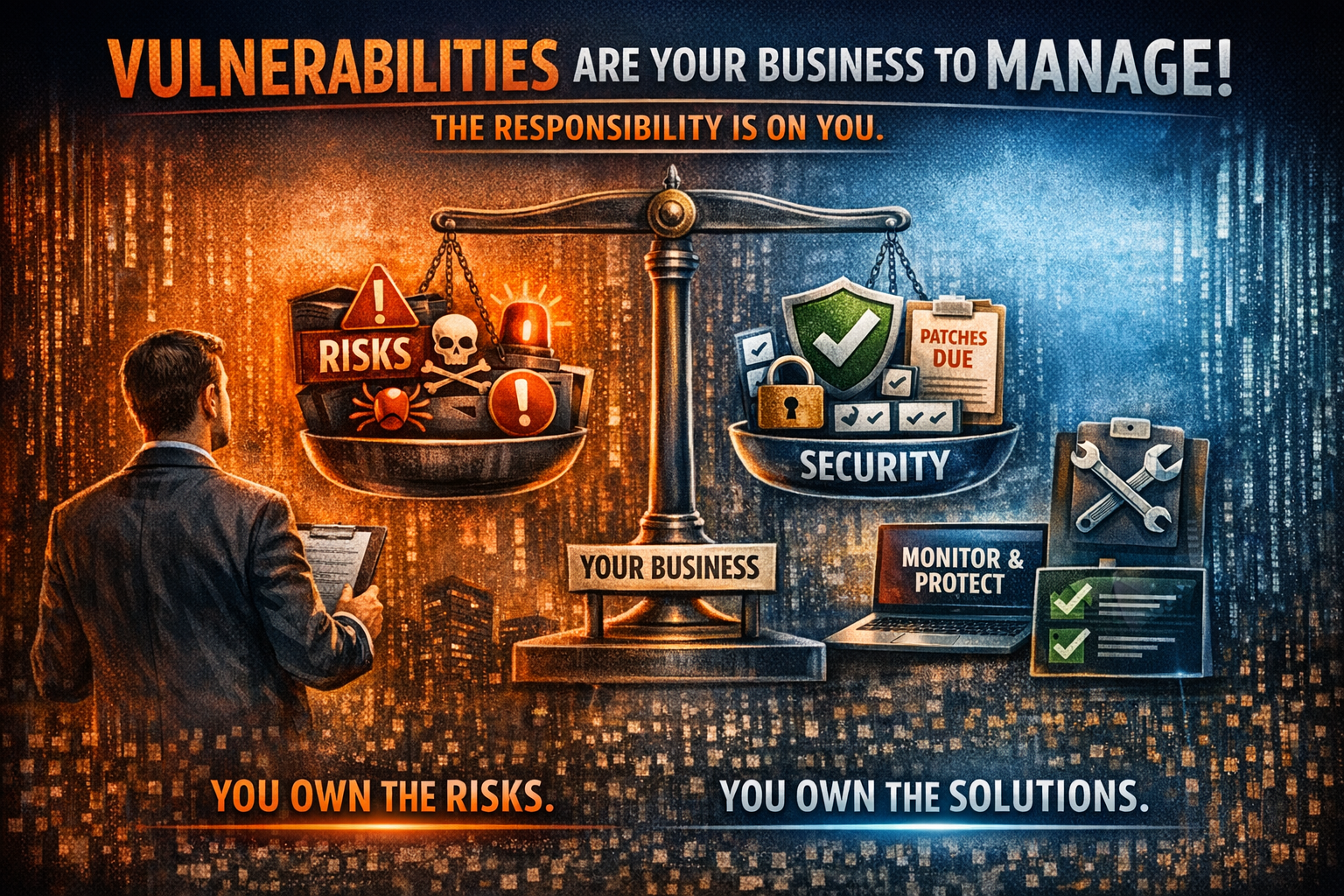
If a vulnerability in that system is exploited, the impact still lands on:
Your operations
Your data
Your clients
Your reputation
Assuming someone else is handling updates doesn’t reduce exposure—it often increases it, because no one is actively verifying the risk. A Real-World Example: Target
One of the most well-known breaches in history didn’t begin with malware on a main system.
What happened: Attackers gained access through an HVAC vendor that had network access to Target’s environment. That external, internet-connected system wasn’t treated as critical infrastructure. From there, attackers moved laterally into payment systems.
The result included tens of millions of customer records exposed, massive financial losses, and long-term brand damage.
Takeaway: It wasn’t a lack of security tools—it was a single overlooked access point.
It’s Rarely the “Main System” That Fails
In our experience supporting Omaha and Midwest businesses, incidents most often trace back to everyday, easy-to-overlook items—printers with outdated firmware, cameras still using default credentials, vendor-installed appliances that were never updated, and legacy devices that are no longer used but remain connected.
Attackers don’t go after the hardest target. They look for the easiest path in.
A Simple Question Every Business Should Ask
Do you know everything that’s connected to your network right now?
Not just laptops and servers, but every device that communicates internally or externally. And do you know whether any of those systems have known vulnerabilities today?
Most organizations can’t confidently answer yes—and that’s where risk quietly lives.
Why vulnerability management is essential: It’s not a quarterly scan or a compliance checkbox. New vulnerabilities are disclosed daily, and attackers move quickly to exploit them.
What’s at stake: Without continuous identification, prioritization, and remediation, vulnerabilities stack up until one becomes the entry point for an incident.
Built In—Not Bolted On—With InfinTechUSA
At Infinite Technologies, vulnerability management is a core part of our managed IT services in Omaha—not an optional add-on.
How we run it: We maintain continuous visibility into your environment, monitor for newly disclosed vulnerabilities, prioritize risk based on real-world impact, and actively manage remediation. This process runs daily, not occasionally.
The Real Risk Isn’t If—It’s Where
Most cyber incidents don’t start because security was ignored. They happen because something was overlooked. A forgotten system. An aging device. A vulnerability no one knew existed. Security incidents start where you’re not looking.
Final Thought
If you don’t have clear visibility into what’s on your network—and whether it’s secure—the risk is already present.
At InfinTechUSA, our role is to ensure that one vulnerability never becomes the reason your business experiences a cyber event.